“You’re Never Too Old to Start Something New”
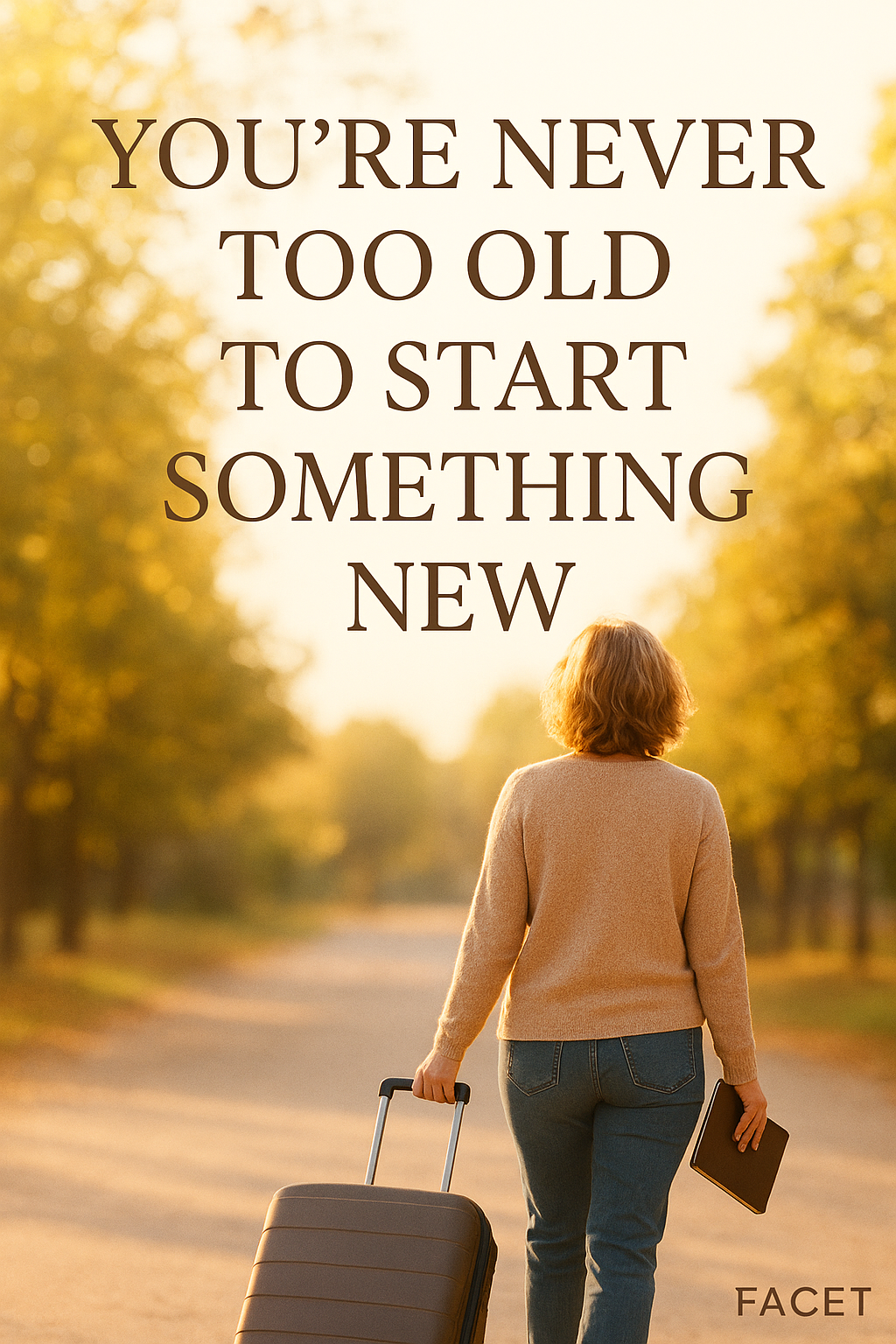
Eighteen years ago after my divorce was finalized, my middle and youngest daughters and I began praying about a change. We sensed that God was leading us to leave our hometown — the place where my girls had grown up — and move to Northern Virginia to be closer to my oldest daughter and my grandchildren.
Once we arrived, I found a job working in a preschool, and at the same time, I made the decision to return to college to earn my Bachelor’s degree. It was something I had long dreamed of doing, and when I finally graduated, I felt such deep gratitude — not just for the degree, but for the courage it took to finish what I started.
Shortly after graduation, I was offered a position as an office manager in a completely different city from my daughters. For the first time, I wasn’t living near family — I was on my own, truly living the life of a single woman.
Scary? Absolutely.
Exciting? Totally.
It felt liberating to travel back and forth to see my daughters and grandkids while building a life of my own. The old me might have been too intimidated to even consider taking a job that far from home, but this new chapter stretched me in ways I didn’t expect.
Moving away forced me out of my comfort zone. I learned to enjoy my own company — going to the gym after work, grabbing lunch with coworkers, or taking peaceful evening walks. In those moments, I realized that God was gently showing me something profound: He was enough for this season.
And then came the pandemic. Like so many others, I found myself working from home, separated from loved ones out of caution and care. Yet even in that stillness, God was near. He continued to teach me that new beginnings aren’t just about fresh starts — they’re about trusting Him to meet you wherever you are.
✨ Mama Wisdom Reflection: Life has a way of surprising us — sometimes by choice, sometimes by change. But no matter your age or season, God isn’t done writing your story. Be brave enough to start again, to step out of your comfort zone, and to believe that the best chapters can still be ahead.
Day 5: Grace Still Shows Up
Opening Stillness
Breathe in grace. Breathe out self-judgment.
“The Lord is compassionate and gracious, slow to anger, abounding in love.”
— Psalm 103:8”
Reflection
Even when we ignore the warning… help still comes.
A fisherman.
A steady hand.
Grace we didn’t earn.
God rescues us not because we listened—but because He loves. He mends what we’ve torn. He lifts us when we’re stuck. And sometimes, He even saves the shoes.
Soul Question
Where have you experienced God’s grace despite your missteps?
Prayer
Thank You, God, for meeting me with mercy. Help me walk forward wiser, humbler, and more attentive to Your voice.
Closing Invitation
Sit in gratitude. Let God’s kindness linger with you today.
Day 4: Beneficial, Not Just Permissible
Opening Stillness
Be still. God’s wisdom is patient.
““I have the right to do anything,’ you say—but not everything is beneficial.”
— 1 Corinthians 10:23”
Reflection
Not everything we can do is good for us.
God’s boundaries are not about control—they’re about care. He sees the loose rocks we don’t notice. He knows what won’t hold us up. And He loves us enough to say no before we get hurt.
Soul Question
What might God be protecting you from right now?
Prayer
Father, help me trust Your boundaries. Teach me to see Your no as love, not limitation.
Closing Invitation
Picture God standing ahead of you, guarding the path with kindness.
Continue to Day 5
Day 1: Stay on the Bridge
Opening Stillness
Take a breath. Let your shoulders soften. God is not rushing you this morning.
“Trust in the Lord with all your heart, and do not lean on your own understanding.” - Proverbs 3:5 ”
Reflection
Sometimes God’s direction feels almost too simple.
Stay here.
Don’t wander.
This is enough.
The bridge doesn’t look exciting. It doesn’t offer the perfect angle or the better view. But it is solid. It is safe. It is exactly where we were told to be.
And yet, something in us believes there’s always something better just a few steps beyond obedience. So we wander. We step down onto uneven ground, convinced we’ll be careful, convinced we’ll be fine.
Until we’re not.
Soul Question
Where might God be inviting you to stay put today?
Prayer
God, slow my steps. Help me trust that where You’ve placed me is enough. Quiet the part of me that believes I’m missing out. Teach me the peace of staying.
Closing Invitation
Sit quietly for one minute. Imagine yourself standing on solid ground with God beside you.
Day 3: The Pull of “Just a Quick Look”
Opening Stillness
Let go of hurry. God meets you right where you are.
“For I do not do the good I want to do, but the evil I do not want to do—this I keep on doing.”
— Romans 7:19”
Reflection
“I’ll just take a quick look.”
It’s rarely the big rebellion that gets us—it’s the small step off the path. The quiet compromise. The belief that we can manage just fine without checking in with God.
We know better. And still… we wander.
Not because we don’t love God—but because we overestimate ourselves.
Soul Question
What “quick look” has been tempting you lately?
Prayer
God, I need You more than I admit. Forgive my shortcuts and my self-reliance. Draw me back to You gently.
Closing Invitation
Read the Scripture again slowly. Let it meet you with honesty, not shame.
Day 2: Dressed for the View, Not the Terrain
Opening Stillness
Exhale. You don’t need to prove anything today.
“Therefore, preparing your minds for action, and being sober-minded...” I Peter 1:13a”
Reflection
Flip-flops work beautifully—until they don’t.
So often, we step into hard seasons dressed for aesthetics instead of endurance. We rely on confidence when what we really need is preparation. We move forward on optimism alone, forgetting that some paths require sturdier footing.
God isn’t calling us to fear—but He does call us to be ready.
Soul Question
Where might you be under-prepared right now—spiritually, emotionally, or relationally?
Prayer
Lord, help me see honestly where I need sturdier shoes. Give me wisdom to prepare, not just confidence to try.
Closing Invitation
Place your hand on your heart and ask God gently, What do I need before moving forward?
“My Cup Runneth Over… So I Left”

While we were planning the meal for Thanksgiving a few weeks ago, I casually asked my oldest daughter Winter how many people we were expecting. Since her home can hold a large number of people, she usually hosts. Now that she’s newly remarried, that comes with bonus family members—like when you order fries and the restaurant surprises you with a few extra at the bottom of the bag.
Winter—my extrovert, my social butterfly, my “fill the whole house with humans” child—texted back immediately:
“About 20 people.”
Excuse me? Twenty people!?
Before I could even gather my thoughts, my middle daughter, Candice, sent her a message:
“I’m gonna have to work up my social battery.”
Translation: “I love y’all… but give me time to prepare my spirit.”
Then my youngest, Faith, the queen of quiet exits, texted me:
“Let’s plan a time. When I look at you—that’ll be our signal to roll out.”
And honestly? I didn’t argue with her little escape plan one bit. That girl knows her limits. She understands her social and emotional bandwidth, and she protects it like it’s a security deposit she expects back in full. That’s her boundary. And it’s valid.
Meanwhile, Winter was still buzzing around like the Energizer Bunny on Red Bull, thrilled at the idea of a crowd big enough to require seating charts, backup chairs, and possibly a fire marshal.
Three daughters.
Three completely different personalities.
Three very real social batteries.
And guess what? Every one of them had boundaries that made sense for who they are.
Here’s the thing:
Boundaries don’t make you difficult. They make you clear.
Some folks thrive around people.
Some folks need a warm-up.
Some folks need a quiet exit strategy and a moment to breathe in the car before driving home.
And there is nothing wrong with any of that.
So let me tell you, holidays will test every kind of boundary you’ve got—mental, emotional, social, and spiritual. But it’s your job to know where your “full” is, so you don’t run on empty trying to please everyone else.
Your “no” is holy.
Your limits are honorable.
Your peace is not up for negotiation.
Even Jesus had boundaries.
He went off to pray alone.
He separated Himself from the crowd.
He said “not now” and “not here.”
So if the Son of God could step away for a minute, why are you worried about telling cousin so-and-so you’re not staying until midnight?
**Mama Wisdom Reflection:
Boundaries aren’t about shutting people out—they’re about letting people in with wisdom. When you honor your energy, your emotions, your needs, and your peace, you show up more whole, more grounded, and less resentful.
In this New Year, pay attention to what drains you.
Pay attention to what feeds you.
Pay attention to what your body, your spirit, and your heart are trying to tell you.
Because protecting your peace is one of the most sacred gifts you can give yourself—not just during the holidays, but every day of the year.
Scripture to Seal It:
“Above all else, guard your heart, for everything you do flows from it.” — Proverbs 4:23
And sometimes guarding your heart looks like:
leaving early,
saying no,
limiting access,
or not inviting 20 people to your house (looking directly at you, Winter).
So listen— set your boundaries with confidence, intention, and absolutely no shame.
If you don’t want everyone in your house till the streetlights come on, say so.
If you need a break, take it.
And if your social battery is about as charged as an iPhone from 2012, go ahead and put yourself on the charger—nobody needs you glitching in public.
And if anyone has a problem with your boundaries?
Tell them you’re simply following the example of Jesus…
who slipped away for quiet time so often the disciples probably thought He invented ghosting.
May your peace be protected,
your “no” be respected,
and your family gatherings start on time and end before your weave starts itching.
Fruit Doesn’t Lie (Why Heaven Won’t Rearrange Itself for Our Comfort)
As we wrap up another Christmas season celebrating the birth of Jesus, it feels like an awfully good time for a reset. A real one—not the kind we post about, but the kind that requires looking in the mirror. An opportunity to revisit that well-worn idea of treating others the way we want to be treated… and then actually imagine what that would feel like if the situation were flipped.
Because it’s easy to talk compassion when it’s theoretical. It’s much harder when it requires empathy.
So pause with me for a second. Consider how it would feel if it were your family being separated. Your children going to bed unsure of what tomorrow holds. Your home feeling less like a refuge and more like a question mark. Suddenly the conversation gets quieter when it’s personal.
That thought pulls me all the way back to my childhood—where I learned early that people can live just minutes apart, attend the same schools, worship the same God, and still draw invisible lines so clear you don’t need a map to see them.
I grew up in a very small, predominantly white town. The white families lived what we called “downtown,” where everything looked shinier and better kept. There were only about twelve black families, and we had our own little community up on “the hill.”
We all attended the same school, but as Black children we tended to stick with what was familiar. Rarely did we see white townspeople up on the hill unless it was the mailman. Black families went downtown for work, groceries, or to see the only white doctor in town—basically for whatever was needed. Town was close enough that we could walk, so our parents often sent us down the hill to run errands.
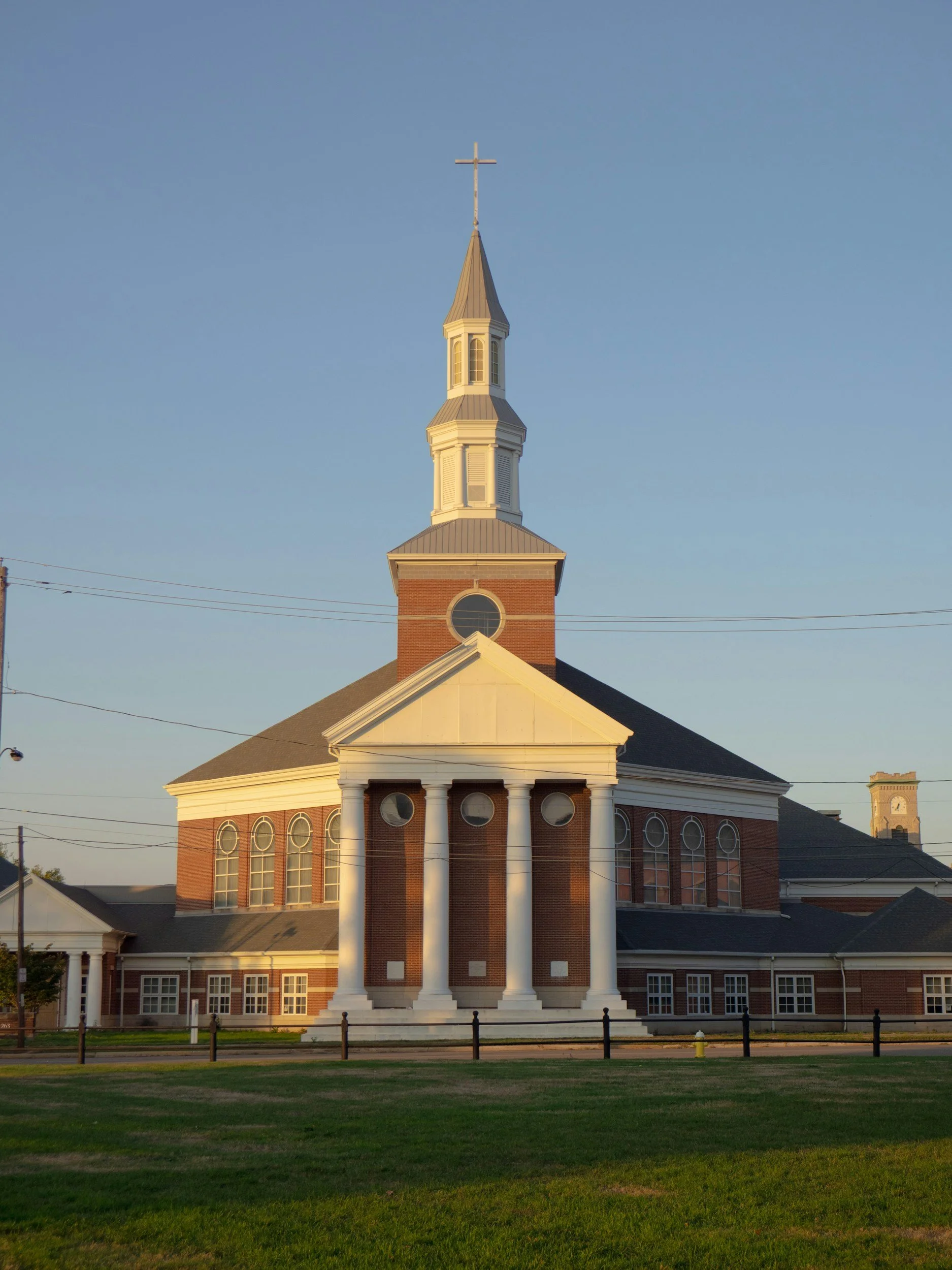
And right there on Main Street stood the large red brick Methodist church.
As a young girl, I often wondered what it looked like on the inside. Then one year, for reasons I still don’t fully know, that congregation decided to invite the black children from off the hill to attend their annual Vacation Bible School.
And guess what happened?
We interacted. We played. We made friends. White and Black families began talking and quickly realized neither was the enemy. Both loved their families. Both wanted the best for their children. Both were simply cultures learning how to coexist in the same small town.
Growing up that way exposes you to how people are reared—how thinking gets passed down, sometimes intentionally and sometimes without anyone noticing. Somewhere between snack time and adulthood, empathy can get misplaced. Like a sock lost in the dryer, never to return.
Feelings disappear. Compassion becomes optional. And suddenly some people believe it’s their right to hurt others—especially those who don’t look like them, think like them, or come from where they do.
What truly gives me pause is how confidently many of these same people call themselves Christians.
Jesus said we would recognize His followers by the fruit they bear. Not by the volume of their opinions. Not by the polish of their platforms. Not by how often they say “God bless.”
Fruit.
Love. Kindness. Mercy. Humility.
(Yes—even self-control. That one seems to wander off regularly.)
And just when we’ve finished sorting who’s “in” and who’s “out,” Scripture gently reminds us we are not on the admissions committee.
I often pause there and think… how does God know who is His?
Perhaps because they love like Him.
Think like Him.
Act like Him.
Not perfectly—but sincerely. Not loudly—but consistently.
God recognizes His own not by labels or declarations, but by resemblance. By hearts that bend toward compassion. By hands that reach instead of recoil. By lives that echo His character even when no one is watching.
Because likeness has always been the giveaway.
And love has always been the family trait.
Forgive me if I shudder at the thought of some future moment when people stand before Jesus—résumé in hand, confidence fully intact—only to hear Him say, “I don’t know you.”
That is not the greeting anyone wants.
Eternity isn’t symbolic. It isn’t optional. And it certainly isn’t something we can outtalk or outspend. Yet many live as though this world will go on forever, like the credits will never roll.
But the curtain is closing—slowly, perhaps—but much faster than we care to admit.
How do I know? Because people are getting meaner. Selfishness is having a moment. Bullying is now rebranded as “being honest.” And basic kindness feels like a rare personality trait instead of the bare minimum. Holding the door open shouldn’t feel like a spiritual gift—and yet… here we are.
We keep convincing ourselves that presidents and politicians will fix what’s broken, as if laws alone can heal a heart problem. Scripture reminds us there is wickedness in high places. Power has always struggled with humility. This isn’t new—it’s just louder.
Some believe there will be no reckoning. That money, influence, intimidation, and spin will work forever. That repeating a lie long enough somehow turns it into truth.
That strategy may work in this world for a while.
But it won’t work with God.
There are no loopholes in truth.
No PR teams in Heaven.
No “do you know who I am?” passes at the gates.
Salvation isn’t a rewards program. Grace can’t be negotiated. Eternity doesn’t run on achievements.
You can change policies and still miss the Person.
You can fix nations and still avoid repentance.
You can look wildly successful on earth and still arrive empty-handed in eternity.
Knowing Jesus was never about being impressive.
It was always about being transformed.
And still—despite everything—I believe.
I believe there are parents teaching their children to love people who don’t look like them. Parents raising compassionate humans who understand the world would be painfully boring if we all looked the same.
There’s a reason God made a rainbow. Every color belongs. Every shade matters. Together they form something beautiful—not competing, not canceling each other out, but standing together in quiet brilliance.
That’s what once made our nation stand out. And it’s a glimpse of Heaven itself: every nation, every tribe, every tongue—not erased, but redeemed.
And for those who think Heaven will be segregated instead of gloriously integrated—you may want to reread the guest list.
This is where Mama wisdom clears her throat.
I say you can tell a lot about a person by how they treat people who are different from them. Different skin. Different accent. Different story.
“If love has conditions,” I can tell you, “it isn’t love.”
You have to understood fruit long before it becomes a sermon topic. Fruit shows up in grocery store lines, at dinner tables, and in how you speak about people who aren’t around to defend themselves.
“If you can admire a garden, you ought to be able to admire God’s people.”
And Heaven? Let me tell you something I am very clear about-
“If you’re uncomfortable around folks who don’t look like you now,” I’m just gonna put it out there, “eternity may stretch you a bit.”
Mama Wisdom Reflection:
“Fruit doesn’t lie, baby—and Heaven won’t rearrange itself to make you comfortable.” 🎤
So yes—the world feels heavy. Fruitless trees are loud right now.
But compassion is still being planted.
Love is still being taught at kitchen tables.
Grace is still stretching across the sky.
And fruit—real fruit, not plastic display fruit—always tells the truth.

Scripture Reflection:
“Nevertheless, the solid foundation of God stands, having this seal: ‘The Lord knows those who are His.’” — 2 Timothy 2:19
“After this I looked, and there before me was a great multitude… from every nation, tribe, people and language.” — Revelation 7:9
A New Year, A New Mindset

New Year’s Day, for many, is a time to renew those promises we make to ourselves — to exercise more, eat healthier, save more money, spend less time online, be more present, rebuild strained relationships, or maybe even travel more.
But if we’re honest, by the end of the first week of January, many of those resolutions have already fallen off the proverbial wagon.
The truth is, resolutions are a lot like diets — they don’t always work. Not because we aren’t capable, but because we often make them without first taking time to sit still and really think about what we’re committing to. Is it truly feasible? Is it something we’re ready to sustain? Is it even what we’re meant to be doing right now?
Before setting goals for the new year, it’s worth pausing to ask God for direction. The Scripture reminds us, “In all your ways acknowledge Him, and He will direct your paths.” (Proverbs 3:6)
This past year, I decided to make small, intentional changes rather than lofty resolutions. Some things I began doing to eat healthier were sitting down and planning my meals for the week, then shopping based on that list. It took away the stress of coming home from work exhausted and grabbing whatever I could find to eat — usually something unhealthy. It also saved me money, since I wasn’t making random grocery runs or picking up fast food on a whim. It felt good to come home, cook from my meal plan, and know I was nourishing myself with purpose.
I also wanted to exercise more, but after climbing three flights of stairs after work, I knew I wasn’t going back down to the gym. So, I bought a small walking pad and started walking right inside my home each evening. I didn’t begin with five miles — I started with 30 minutes and gradually built up from there. Baby steps toward the life I desired, instead of overwhelming resolutions that often fade by February.
And one of the most meaningful changes I made was stepping away from social media for an entire year. I only returned to share my blog posts. I wanted to be more present in my real life — engaged with my family, my faith, and the quiet moments that matter most.
I don’t know what your New Year’s desires may be, but whatever they are, start small. Make resolutions that are realistic and rooted in intention. One small step at a time, you’ll look back and say, “I did it.”
🌿 Mama Wisdom Reflection
True change doesn’t come from grand resolutions — it grows from quiet consistency, guided by faith. Take one small step today, and trust that God will meet you in the movement.
All the Gifts Are Open… So Why Do I Feel Like This?

After Christmas, when my kids were younger and all the presents had been opened, I would feel an unexpected heaviness settle into my soul. The excitement was over, the wrapping paper cleared away, and instead of relief, I felt a quiet emotional letdown. I never mentioned it to anyone. I just assumed it was something I needed to push through.
But year after year — even as my kids got older — that same feeling showed up once the holidays were over. I remember wondering, What in the world is wrong with me?
Later, I learned there was actually a name for it: “post-holiday blues”, sometimes called “holiday letdown.” And simply knowing I wasn’t alone changed everything.
Why This Happens
One reason the after-Christmas letdown can feel so heavy is because several things tend to hit all at once. After weeks of anticipation, traditions, and constant activity, your emotions can feel scattered when everything suddenly stops. Life snaps back to schedules, routines, and responsibilities almost overnight.
Maybe during the holidays you were out at parties, meeting up with friends, and surrounded by noise and connection. Then suddenly, your social calendar goes silent. Add to that the credit card bills quietly creeping into your inbox, reminding you just how much you spent trying to make everything magical.
Before I go any further, I want to say this: I’m not sharing these thoughts casually. I’ve spent extensive time in counseling myself, worked at a mental health practice for three years, and I also have the privilege of having a daughter who is a licensed mental health therapist. Through all of that, I’ve picked up a few things for my own mental health toolbox.
One of the things I’ve learned about along the way is something called Seasonal Affective Disorder (SAD) — a form of depression that’s tied to changes in seasons, especially during the darker winter months. For some people, the post-holiday slump isn’t just emotional exhaustion; it’s also biological. And knowing that matters, because it reminds us this isn’t a personal failure — it’s something many people quietly experience.
One last piece that doesn’t get talked about enough is expectation versus reality. Sometimes Christmas doesn’t turn out the way we hoped. Unmet expectations, strained relationships, or moments that didn’t feel as joyful as we imagined can leave a lingering disappointment long after the decorations come down.
Symptoms I Experienced (Maybe You Can Relate)
Here are some of the things I used to experience — maybe you’ll recognize a few:
Feeling down or sad
Lack of motivation
Irritability (kudos to those around me who survived it)
Feeling emotionally drained
Trouble focusing on tasks that need to be done
An overwhelming sense of “What now?”
Like you, I wondered if something was wrong with me. The short answer is no — in my very non-professional opinion. It’s like hyping yourself up on 20 cups of caffeine and then crashing hard when the high wears off. Your body and emotions are simply coming down from a season of intensity.
What Helped Me Cope
Some of the simple things I learned to do to cope with the holiday blues include:
Keeping the Christmas lights up a little longer
Working on a vision board or planning something to look forward to
Opening the curtains and letting natural light fill the room
Taking calming walks or doing gentle workouts
And most importantly, not being ashamed to call it what it is —
“The Holiday Blues.”
Naming it helped remove the guilt and the confusion.
I do recommend that if your sadness lasts more than a few weeks, worsens, or starts interfering with your daily life, it’s worth checking in with a healthcare provider or counselor. And yes — y’all know I’m going to recommend my daughter! Why? Full disclosure. Cos’ I’m biased. Shout-out to Candice 🤍
Mama Wisdom Reflection
So baby, if you’re feeling off, you’re not broken or ungrateful. December is an emotional sprint fueled by noise, sugar, and high expectations. When it ends, the crash is real.
The gifts are opened, the decorations come down, and life suddenly expects you to function like nothing happened. That “now what?” feeling doesn’t mean you missed the magic — it just means you’re human.
So leave the lights up a little longer, move slower if you need to, and give yourself some grace.
January doesn’t need your best — it just needs you upright and caffeinated.
If this resonated with you, take a moment to pause and breathe. Share this with a friend who might be feeling the same quiet heaviness, or leave a comment on Instagram or Facebook and let me know — you’re not alone in this season. Have you ever felt the holiday letdown once the celebrations were over?
Baby Girl, We Might Need to Re-Read the Red Letters
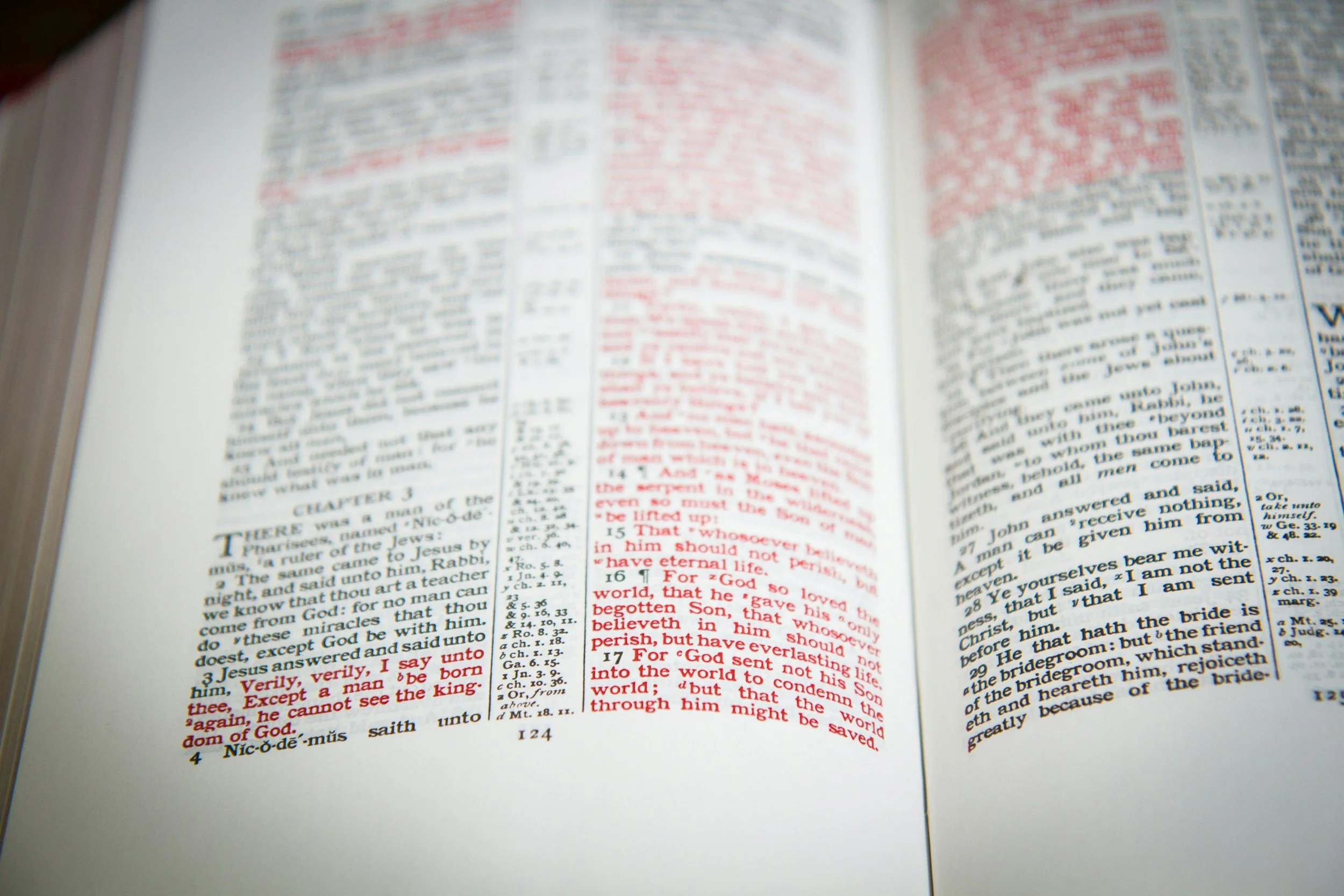
We might need to re-read the red letters.
Not because Jesus has changed—but because somewhere along the way, we started paying more attention to people than to Him.
In my formative years, I must confess, I had a love–hate relationship with the church. In my family, not going to church—during the week and on Sundays—was not an option. I can’t recall if giving our lives to Christ was ever part of the criteria, but I do know this: our physical bodies had to be planted on those pews whenever the doors were open.
I suppose the hope was that if we sat there long enough, we’d catch a clue about Jesus just by being there.
But I was—and still am—an avid reader. And I genuinely loved the stories of the Bible. So I spent countless hours reading the Scriptures for myself- so much so that my siblings jokingly called me “holy roller.” And wouldn’t you know it—the more I read, the more those words began to change how I thought, how I saw people, and how I understood faith.
That’s when I started noticing something.
What I was reading in the red letters—and what I was watching in real life—didn’t always line up.
What I read spoke of humility, mercy, forgiveness, and love. What I often observed was impatience, division, and a quiet resentment that lingered in the pews. And asking questions wasn’t really an option. Curiosity was corrected. I learned quickly that questions were met with rebuke, usually wrapped in the phrase, “Stay in your place.”
So I stayed quiet—but I didn’t stop reading.
And that may have been the grace of it all. Because even when people shut down the conversation, the Scriptures kept speaking. They continued to shape me, challenge me, and quietly plant the understanding that faith was meant to be lived—not just inherited or enforced.
Years later, I would understand this more clearly: many people have been deeply disillusioned by those who loudly proclaim they are Christians. I understand that too. Somewhere along the way, we stopped reading the words of Christ and started reading people instead.
That shift matters more than we realize.
I have met many people who flat-out refuse to attend church anymore. They are triggered by the seeming hypocrisy of church folk. I get it. I hear you. I won’t leave because people are still being transformed slowly, imperfectly, and sometimes painfully. I won’t leave because hearts are still under construction. Remember—we are all a work in progress.
But baby, let me tell you something—I will leave a church in a heartbeat if Scripture is being twisted.
Jesus was sent to forgive us of our very human sins—every one of them. But forgiveness was never the finish line; it was the doorway. We were meant to be transformed by His teachings—how He loved, how He corrected, how He served, and how He forgave, even when it cost Him everything.
“Be doers of the word, and not hearers only, deceiving yourselves.”- James 1:22
Somewhere along the road, we began measuring Christianity by behavior instead of by Christ.
People will disappoint you. Churches will disappoint you. Leaders will disappoint you. If your faith is anchored to people, it will always be fragile. People are flawed, inconsistent, and still very much under construction—myself included.
But Jesus remains unchanged.
I don’t care who acts a certain way or who fails to live up to the label they wear. My eyes are not on them. My eyes are on Jesus and His teachings—the red letters and the example that never wavers. He is not a distant historical figure to me. He is as real as the nose on my face—present in grief, steady in joy, faithful in the quiet moments when no one else is watching.
He is still worth following.
I know we all desire community—to feel connection, belonging, and relationship within the church. That’s natural. But community should never be the plumb line for why we attend a church.
When it becomes the main reason, that’s your flashing red light.
Stop
Pause.
Realign your thinking.
Instead, look first for this: Does the teaching line up with Scripture? Does it point you back to the words of Jesus, or does it bend to fit culture, comfort, or consensus?
Because when the foundation is right, everything else eventually falls into place. Genuine community. Meaningful relationships. Shared purpose. Those things grow best when truth is rooted deeply beneath them.
Scripture reminds us of the proper order:
“They devoted themselves to the apostles’ teaching and to fellowship, to the breaking of bread and to prayer.”
Acts 2:42
Notice the order. Teaching came first. Fellowship followed.
Some say, “Christians give Christ a bad name.” But the truth is, we don’t give Christ a bad name—we give ourselves a different one: hypocrite. We say one thing and then put on masks, acting like someone entirely different when it costs us nothing and no one is watching.
So many people long to hear the words, “Well done, my good and faithful servant.” But that raises honest questions we don’t ask often enough. Were we good? Were we faithful—not just in name, but in practice? Were we faithful to His teachings, or merely familiar with them?
Did we allow His words to truly transform us, so much so that others could say, “We know they have been with Jesus”—not because of what we claimed, but because of how we loved, spoke, and lived?
I was taught that we are known by the company we keep. And yet somewhere along the way, we allowed the culture of this world to rub off on us more than the words of Christ. We absorbed opinions, outrage, and attitudes with ease, while leaving His teachings quoted—but not practiced.
There is a Scripture that warns us plainly: “Broad is the road that leads to destruction.” The broad road looks easier. It’s crowded. It’s popular. It requires very little resistance and even less courage.
The narrow road, on the other hand, is quieter. Fewer voices. Fewer affirmations. It doesn’t trend well, and it doesn’t blend in. Yet Jesus tells us plainly that this is the road that leads to life.
So many are encouraged to “get on board” with whatever the culture is promoting—to adjust, soften, reinterpret, and stay relevant. But following Jesus has never been about convenience or popularity. The narrow road was never meant to be easy; it was meant to be faithful.
The broad road asks only that we agree.
The narrow road asks that we surrender.
And surrender is costly.
We think that wearing crosses will be enough. But do we really have a right to wear a cross if we have not crucified our selfish desires—our pride, our need to be right, our comfort, our appetite for approval?
The cross was never meant to be an accessory.
It was always an invitation.
An invitation to die to self.
An invitation to be changed.
An invitation to follow Him all the way.
So maybe—every now and then—we all need to pause and re-read the red letters.
Not to see what everyone else is doing wrong, but to realign our own hearts. Not to measure people, churches, or movements—but to measure ourselves against the words of Jesus.
Because when things feel off, when faith feels heavy, and when disappointment creeps in, the problem is never Him.
It’s that we’ve been watching people too closely and listening to Jesus too little.
If you don’t mind a little advice from Mama Wisdom: When what you see doesn’t match what you’ve been taught, go back to the source. Sit with His words again. Let them correct you, soften you, and steady you.
The red letters still say what they’ve always said.
And they still lead where they’ve always led.
Back to Him.
The Wonder of Christmas

What comes to mind when you think of Christmas?
Anyone who is familiar with me eventually discovers that Christmas is my absolute favorite time of the year. Even my colleagues will tell you how much I love the joy of Christmas—putting up decorations, the spirit of giving, and most of all, the beauty of what Christmas represents to me as a believer in Christ.
Every now and then, I might cross paths with a “Scrooge spirit”—someone who dreads the hassle of gift-giving or decorating. But even that brings me joy, because somehow, the season of Christmas manages to squeeze generosity from the tightest of fists and soften the hardest of hearts.
Still, I know not everyone feels the same excitement. For some, this season may bring more reflection than celebration. Maybe it’s the first Christmas spent alone after a divorce or the loss of a partner. Maybe the kids are grown now, traveling with friends or beginning their own holiday traditions. If that’s you, remember—your Christmas doesn’t have to look like everyone else’s.
Perhaps this is the year to start something new, go to brunch with someone in a similar season, plan a small getaway, or attend a Christmas concert or church service that lifts your spirit. There’s no wrong way to celebrate.
Whether you’re surrounded by family in the hustle and bustle of shopping and cooking, or you’re enjoying the quiet beauty of a slower season, I hope you still find that same sense of awe, wonder, and peace that Christmas brings.
As I sit in the glow of my Christmas tree lights, I’m reminded that Christmas isn’t just about gifts under the tree or even the gatherings we share—it’s about the gift that was given to us over two thousand years ago, Jesus Christ. He is the reason for the hope we carry, the joy we feel, and the love we share.
So wherever this Christmas finds you—whether your home is filled with laughter or silent prayer—let your heart be filled with gratitude. Take time to pause, breathe in the peace of the season, and remember that even in life’s changing seasons, God’s love remains constant.
Mama Wisdom Reflection: May your heart be light, your home be warm, and your soul be reminded that the true wonder of Christmas lives within you.
When Identity Gets Amnesia (Stop Letting Familiar Voices Rename You)

My three daughters grew up with a dad who hammered one phrase into them like it was a family commandment: “Know whose you are.”
If they forget every other parental lecture, all three of them remember that one. It wasn’t about ownership—it was about identity. Who you belong to. What you represent. How you carry yourself when we’re not standing right there watching.
That phrase came rushing back to me this week when I remembered something that happened years ago with my oldest daughter, Winter—our social butterfly, opinionated extrovert, and unofficial playground ambassador—was in the fourth grade.
At the time, I was pregnant with my youngest and supposed to be on limited movement. The elementary school was thankfully just around the corner, so I could drop the girls off and be back on bed rest in a matter of minutes. Or so I thought. No sooner had I gotten settled under the covers than the phone rang.
The school.
Of course.
It was the principal, and I instantly sat straight up in bed like I had been called into the office. She explained that Winter was currently sitting in her office due to an “incident” on the playground involving a group of kids. I remember thinking, how could she have gotten into trouble that fast? They’d barely made it through the front doors.
As the principal continued, she shared that when she tried to explain to Winter that her parents would not approve of that kind of behavior, Winter didn’t exactly receive the correction with humility and reflection.
Instead, she talked back. Well… actually the word the principal used was “belligerent.”
Without missing a beat, I sighed and said ,“Please forgive her. She forgot whose child she is.”
After my morning devotion time and then on my drive to work, that statement made many years ago replayed in my mind. And it struck me how often that’s true—not just for fourth graders on a playground, but for grown adults navigating real life.
As I reflected, it came to me that usually there are three groups that try to get us to question the reality of whose we are.
The first is the enemy of our souls. Satan.
He’s been running the same strategy since the beginning. He even tried it on Jesus. In the middle of a forty-day fast—when Jesus was physically exhausted and humanly vulnerable—the enemy said, “IF you really are the Son of God, jump off this mountain.”
If.
As if Jesus needed to prove anything.
As if risking His life would somehow validate His identity.
You want Me to potentially cause grave injury to Myself just to prove who I already know I am? Absolutely not. Get away from Me.
That’s how the enemy works. He doesn’t usually deny our identity outright—he just places a question mark where God already put a period. He whispers “if” when God has already said you are.
And when we forget whose we are, we start entertaining dares we were never meant to accept and proving things that never needed proof.
The second group is our family.
And that one hurts a little more.
Even though we may share the same parents and bloodline, sometimes the very people who should be most secure in our identity are the ones who question it. They question our worth, our calling, and our obedience—right where there should be no doubt.
Jesus experienced this too. Scripture tells us that even His own siblings thought He was out of His mind. They tried to restrain Him from doing His Kingdom mission and questioned by whose authority He was doing those things.
The same thing happens to many of us. Often, we become the outcasts of the family—not because we’ve done something wrong, but because obedience makes people uncomfortable. Instead of questioning themselves, they try to make you question who you are.
It shows up in sideways comments, awkward silence, or “loving concern” that feels more like doubt than support.
Sharing DNA doesn’t always mean sharing discernment. And sometimes the hardest place to remember whose you are is right in the middle of your own family.
The third group is associates, neighbors, religious people, and peers.
These are the people who know just enough about us to feel qualified to limit us.
They remember where we came from. They saw our humble beginnings. They know our background- they assume they know our limit - and in doing so they miss our calling.
Jesus encountered this too. People said, “Isn’t this the carpenter’s son?”
They underestimated Him because they were familiar with His story but blind to His identity. They mistook humility for limitation and ordinary beginnings for a lack of divine assignment.
There’s an old saying: “Familiarity breeds contempt.”
The danger wasn’t simply that they dismissed Him—the danger was that their familiarity dulled their spiritual senses, causing them to fail to recognize the Son of God standing right in front of them.
And the same thing happens to us.
People will try to reduce us to who we were instead of recognizing who God says we are. They’ll measure us by our past, our last name, or our perceived “type,” and completely miss the calling on our lives.
But knowing a little about someone’s background does not give you authority over their identity.
Mama Wisdom Reflection: Here’s the full-circle truth I came back to this week:
When Winter forgot whose child she was, it didn’t change whose child she actually was. It just meant she needed a reminder.
The same is true for us.
When the enemy whispers “if,” when family questions your calling, and familiarity tries to shrink you—pause and remember whose you are.
Because you don’t need to prove it.
You don’t need to perform for it.
You don’t need to jump off any mountains to validate it.
Sometimes the most powerful thing you can say—whether you’re in a principal’s office or navigating adulthood—is:
“Please forgive me… I had a moment. I forgot whose child I am.”
And then you straighten your crown, adjust your posture, and carry on—
identity intact, authority restored, and no playground drama required.
Hope In This Raggedy World? Chile…Be Serious.

I was scrolling the other day-minding my business-when I came across a video of a podcaster stopping random folks on the street asking, “Do you believe in Jesus?” Baby…I lost count of how many people said, “no” and kept on walking like he was trying to get them to sign up for satellite TV.
And I’m not gonna lie- it made me sad. Not judgmental. Not holier-than-thou. Just sad.
Because if you’re putting your hope in this world? Whew. Chile… you are signing yourself up for disappointment on backorder. This world is shaky. People flaky. Systems failing. Morals optional. And if you haven’t noticed, common sense is running out like it’s on clearance.
Some people are putting all their trust in job titles that can evaporate overnight, relationships and situationships built on “vibes”, money that disappears faster than your paycheck hits your account, and political leaders who change their minds more than they change their socks.
And let me just go ahead and say this, some folks are literally waiting on their favorite politician or political group to turn this world right-side up. Baby…your hope is leaning on the wrong wall. I promise you this: No politician can save your soul. No party can fix the human heart. And Congress can barely agree on what time to meet-let alone the condition of the human spirit.
This is exactly why I Corinthians 15:19 hits like a truth bomb: “If our hope in Christ is good for this life only and no more, then we deserve more pity than anyone else in all the world.” In other words-If all we’re living for is what’s happening down here.. then Lord help us, because we’re missing the whole point.
Hope in Christ isn’t just for surviving this world. It’s for rising above it. It’s for eternity. It’s for the bigger picture we can’t even fully see yet.
That’s what made that video sting. Not that people said no-everybody has their own journey. But some of them really don’t know there’s a better anchor available. They’re out here trying to hold onto a world that can’t even hold itself together.
And listen believing in Jesus doesn’t make life perfect. But it does give your hope a home. A foundation. A direction. It makes your hope finally make sense.
So yes, it broke my heart a little. But it also reminded me:
Sometimes the only Bible someone will ever read ..is watching how YOU live, how YOU love, and how YOU walk through chaos without falling apart.
Mama Wisdom Reflection: Hope is not passive- it’s placed. And every day we decide where to put it. Some put it in people. Some put it in politics. Some put it in their paycheck. But only one place is strong enough to hold it.
May we keep choosing Jesus-the ONE who doesn’t change with trends, elections, opinions, or moods.
Now if you STILL trusting in this world, God bless you. Because this world will hype you up, switch up on you, cancel on you, and then pretend it never met you.
You’ll be sitting there clutching your chest like, “I know you lying…”
But Jesus? He’s the only one who won’t do you like that. No switching stories. No ghosting. No “per my last email” energy.
So yeah- put your hope wherever you want. But when life goes left and your world starts spinning, don’t call me about, “Girl… you will NOT believe what happened.”
Because I’m gonna smile, hand you a snack, pat your back, and say, “Baby.. I TOLD you.”
With love.
God’s love.
But still---
I told you.
Obedience Would’ve Saved the Shoes

Last year, my two youngest daughters and I—along with my 70-year-old friend who still plays pickleball every day and apparently channeled her 25-year-old self—decided to go on a cruise. One of our excursions took us to the beautiful Cayman Islands.
Up until that point, my adventurous middle daughter, Candice—who, mind you, is the therapist in our family—had been doing exceptionally well. She followed my itinerary. She listened. She stayed where she was supposed to stay.
Which should have been my first warning.
Because even therapists need therapy.
We disembarked the ferry, boarded the tour bus, and enjoyed the sights. When the tour guide announced we could stop and look around, Candice was one of the first ones off the bus, with my pickleball-playing friend hustling behind her like they were chasing a blessing.
Me and my youngest daughter, Faith, stayed practical. We grabbed a few souvenirs, admired the view, and headed back to the bus—because the driver was very clear: do not get left.
We were seated and waiting when our phones rang.
Candice.
“Mom… can you come help me?”
Help you… how?
Instead of staying on the bridge overlooking the water—where safety, obedience, and good sense lived—Candice and my friend decided to venture down below the bridge, across a bed of sharp, uneven rocks, all just to take a few photos from a particular angle.
And there she was.
Foot wedged between rocks.
Flip-flops torn beyond repair.
Confidence still intact.
Meanwhile, Faith sat firmly on the bus and announced to everyone within earshot,
“No, Mom. I’m not getting off this bus. She always gets into these predicaments. Absolutely not.”
And honestly? She was not wrong.
Other passengers tried to persuade her.
Faith stayed put.
Boundaries strong.
So I did what mamas do—I got off the bus. When I reached the bottom of the hill, a kind fisherman was already assisting. Not only did he help them up, but he MacGyvered Candice’s flip-flop like it was brand new.
I stood there watching my child—who counsels people for a living—get rescued in flip-flops.
To this day, I still don’t know what convinced Candice and my friend that risking bodily harm for a few pictures on a bed of rocks was a good idea. I mean… slipping, sliding, and emergency footwear surgery—for an angle.
And that’s the warning.
Because sometimes we put ourselves in unnecessary danger trying to capture something that looks good, instead of staying where God already told us it was good. We risk peace, safety, and wisdom chasing moments that won’t even matter next week.
And what possessed her to think she was prepared to traverse sharp rocks in flip-flops?
The confidence was impressive.
The preparation was nonexistent.
But if we’re honest, we do the same thing.
Sometimes we fool ourselves into thinking we’re more prepared for life than we actually are. We confuse confidence with readiness, passion with wisdom. We dress for the view instead of the terrain.
We step into rocky seasons wearing spiritual flip-flops—
No prayer.
No patience.
No guardrails.
Just vibes and optimism.
The apostle Paul said it best in Romans 7:15:
“For I do not understand my own actions. For I do not do what I want, but I do the very thing I hate.”
We hear God say, “Stay on the bridge.”
And we respond, “I’ll just take a quick look.”
Now let me be clear—God is not trying to suck the fun out of our lives.
He’s not anti-joy.
He’s not anti-adventure.
But some things are simply not expedient for our safety.
As 1 Corinthians 10:23 reminds us:
“‘I have the right to do anything,’ you say—but not everything is beneficial.”
God’s boundaries aren’t punishment; they’re protection. He sees the loose rocks we don’t. He knows flip-flops won’t hold up where we’re headed. And He understands the fall before we ever take the step.
And thank God—just like that day in the Cayman Islands—He often sends help.
Grace.
Mercy.
A fisherman.
Not because we listened the first time…
But because He loves us anyway.
Mama Wisdom:
Obedience doesn’t cancel joy—it preserves it.
Confidence without preparation is a setup.
And obedience would have saved the shoes—without them needing emergency surgery. 👟🙏
Kindness Never Goes Out of Style — Check the Tag
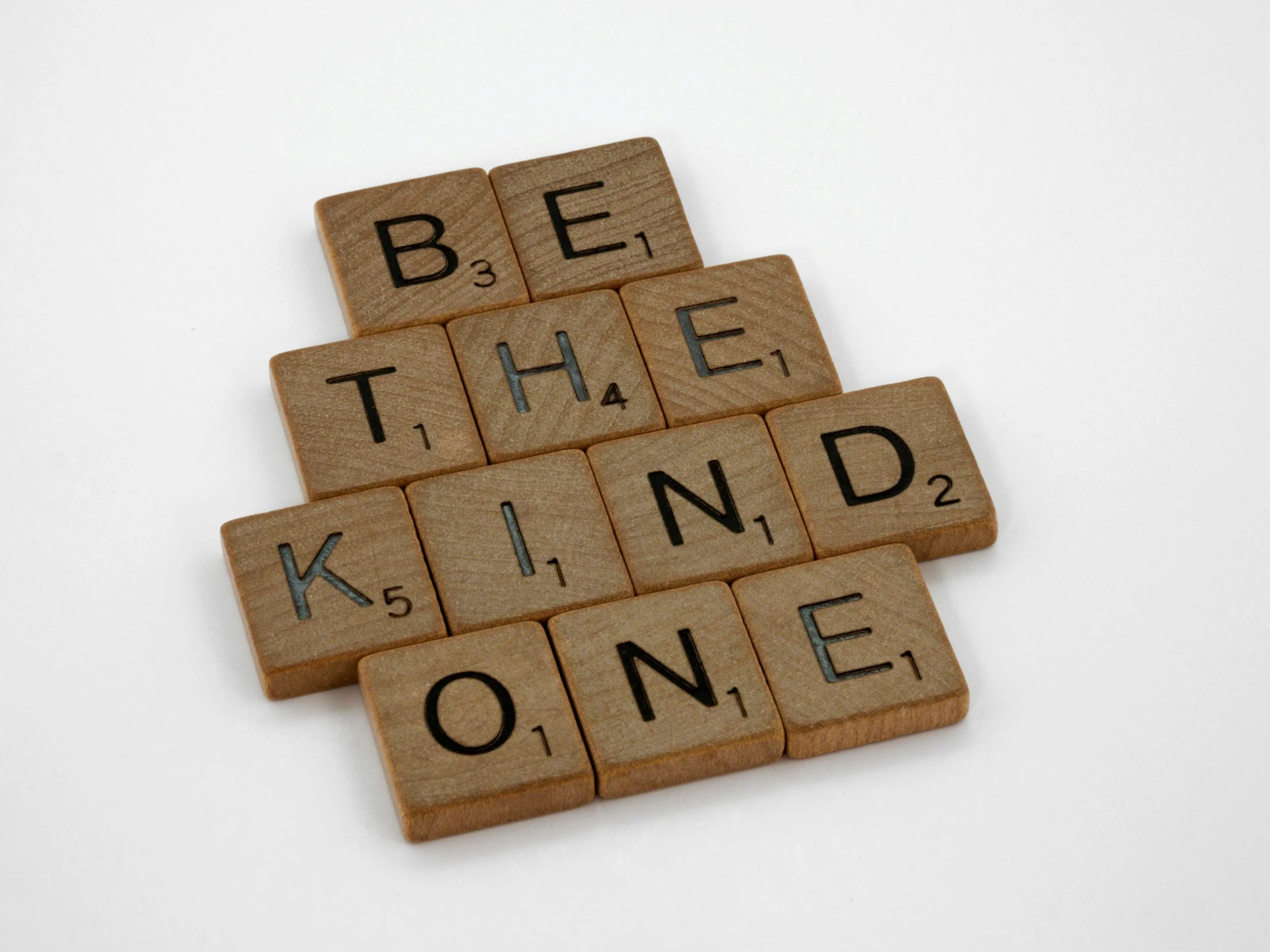
Now listen…
I was literally sitting at my desk cleaning up this blog on kindness — minding my own business, listening to my holiday music, choosing peace — when the phone rang and this lady called in.
I slipped into my usual calm, professional intro, and baby… she promptly and RUDELY cut me off.
Didn’t even let me finish my “How may I help—”
Nope.
She came in hot like someone had unplugged her patience overnight.
So I tried to gently de-escalate, letting her know I understood she was frustrated.
But whew… that only made her madder than a wet hen with curlers in.
Then she told me her age like she was revealing a classified document.
So I said—very respectfully, with good home training—
“Well, bless you!”
And she snapped back with:
“Don’t you DARE say that to me!”
Ma’am.
MA’AM.
At that point I’m sure even the angels were looking at each other like, “Lord… should we intervene?”
But no. That was my test for the day.
My kindness meter was shaking, rattling, trying to leap off the wall like, “Girl, we don’t get paid enough for this.”
And yet… grace won.
Again.
Because LIFE clearly decided to hand-deliver content for this blog.
Yet here’s another truth…
Ladies — especially my beautifully seasoned queens in your 60s, 70s, 80s — your age does NOT give you a ‘Get Out of Jail Free’ card when you’ve been unkind to someone.
Wisdom should sweeten you, not sharpen you.
Experience should soften your tone, not turn it into a weapon.
Respect is earned, not automatically issued like a Social Security check.
Let me just go ahead and say it:
Whatever happened to kindness?
It used to be the first thing parents tried to instill in their kids — right after
“Don’t touch that,”
“Stop doing that,”
and
“Lord help me, why would you put that in your mouth?!”
Kindness was the standard. The expectation. The bare minimum.
Now?
We’re in an era where being mean is trending like it’s a new makeup launch. Folks acting ugly and calling it a personality trait. The world says “karma,” Scripture calls it reaping — either way, keep on living… whatever you put out there is coming back like a package you forgot you ordered.
And since my blog caters mainly to women (there are some men who sneak in here—hey y’all), I just have one question:
What is this fascination with being rude on purpose?
I mean, some women walk around with their faces scrunched up so tight you'd think they were trying to hold in a sneeze and a secret at the same time. Talking nasty to people like it’s cute. Honey… that is not a badge you want pinned to you.
And let’s be honest — in my opinion?
It ages you.
Some women are spending thousands on Botox, fillers, lifts, tucks, and all the “-plasties”… when they could’ve saved all that money by relaxing their face and being nice.
Smiling is free.
Kindness is free.
And shockingly — both do wonders for your appearance.
Now, I work in an industry where I talk to people all day, and most mornings I’m prepared for a little spice. But sometimes?
Whew.
The phone rings and the person on the other end is so rude it feels like they woke up from fighting with Satan all night . Meanwhile I’m sitting there thinking:
“Sweetie… it’s too early in the morning to be this mean. What’s wrong?”
But instead of matching their energy, I let them carry on—quietly twirling my braids, sipping my water, letting them deliver their keynote speech on misery. Eventually, they realize I haven’t said a word.
Then I ease in gently with:
“Now… how can I assist you? I didn’t want to interrupt.”
That right there?
Throws them completely off their kilter.
Suddenly they’re sputtering, softening their tone, recalibrating their whole spirit like I didn’t just hear the opening scene of their villain origin story.
But for others?
Oh, it riles them up even more.
At that point you just press that transfer button and whisper,
“Lord… strengthen whoever picks this call up next.”
And while the line is ringing, I’m praying:
“Father, please let them answer… because if this woman calls back in here again, I’m clocking out and starting my lunch break at 9:07 AM.”
But this is what I’ve learned:
We stay gracious.
We stay classy.
We keep our tiaras from slipping.
Because kindness?
It never goes out of style.
It’s evergreen. Classic. Couture for the soul.
Scripture Reflection — Proverbs 31:26
“She opens her mouth with wisdom,
and the teaching of kindness is on her tongue.”
Mama Wisdom Reflection: A virtuous woman doesn’t just dress well — she speaks well.
Her words carry wisdom, softness, and grace.
She knows her strength isn’t in loudness or harshness, but in the quiet confidence of being kind in a world that celebrates mean.
Ladies, let kindness be your signature fragrance.
The one that lingers long after you’ve left the room.
“When God Says ‘Trust Me,’ Honey, He Ain’t Saying Yes.”

I thought that title would capture your attention!
But stay with me, because it’s not as rebellious as it sounds.
I’ve lived enough life and walked with God long enough to understand something that took me years to admit out loud:
When God whispers, “Trust Me,” the answer… is usually a “no.”
Now hold on—don’t grab your prayer cloth or start flinging holy oil at my blog on your screen just yet. Bear with me a few minutes to let me explain.
There was a scripture I loved when I was growing into my relationship with the Lord:
“All of God’s promises are yes and amen.”
In my early days I interpreted that to mean, “If I want it, God must be saying yes, because, well… scripture.”
So imagine my shock when I later learned that this did not mean God was obligated to hand me whatever shiny thing my heart desired.
I know, sweetie—your feelings are hurt. You wanted me to tell you this isn’t true.
But listen, I’m not saying God doesn’t answer prayers.
I am saying He isn’t a genie in the sky waiting for you to shout some magic church phrases so He can grant your every desire.
God is far more invested in answering prayers that line up with His will, your growth, and His Kingdom’s purpose—not just our cravings.
And am I telling you that you shouldn’t pray?
Absolutely not!
But I am telling you to shift how you pray.
Instead of, “Lord, give me what I want,” try:
“Lord, this is what’s happening down here in my world—as You can clearly see.
Can You give me direction on how I should move concerning this or that?”
That kind of prayer keeps your heart open, not entitled.
It invites God to lead rather than perform.
And it positions you to receive something better than what you were begging for.
Let me share a personal story, because my life has been one long curriculum in the School of “Trust Me.”
Most people know that my former spouse left me out of the blue.
I came home and found a yellow sticky note with the words:
“I’m gone. Get a job.”
Well—what does any red-blooded Christian woman do at a time like that?
I grabbed the horns of my bedpost and begged God to make it un-true, to save my marriage, to turn it all around.
And right in the middle of my boo-hooing, I felt something deep in my spirit.
Not thunder. Not lightning.
Just a firm whisper: “Trust Me.”
And in that moment, I knew exactly what that meant.
God was not going to answer that petition.
The answer was no.
Not because He wanted to break me, but because He wanted to build me.
And let me tell you something I never thought I’d say:
I’ve learned to love God’s “no.”
When I look back over the years—every tear, every closed door, every detour—
His no was better than any yes I ever could have received.
Every “no” protected me from something I didn’t see, pushed me into growth I didn’t want, and prepared me for blessings I couldn’t imagine.
God’s “no” isn’t rejection.
It’s redirection.
It’s refinement.
It’s Him saying,
“Daughter, I know the way. Trust Me—even when it doesn’t feel like a blessing yet.”
Mama Wisdom Reflection:
Maybe you’re standing in your own moment right now—hands gripping the bedpost of life, heart cracked wide open, asking God to fix what feels unfixable.
If that’s you, hear this from someone who has lived through the “no’s” and survived the shaking:
God’s “no” is not the end of your story.
It’s the beginning of a better chapter.
Sometimes the greatest act of faith isn’t shouting, “Yes, Lord!”
It’s whispering, “Okay… I trust You,” even when the answer isn’t what you prayed for.
So breathe.
Release your timetable, your expectations, your fears.
And let God lead you into a future where His real yes has already been set in motion.
Scripture to Hold Close
“Trust in the Lord with all your heart;
and lean not on your own understanding.
In all your ways acknowledge Him,
and He shall direct your paths.” — Proverbs 3:5–6
Let this be the truth you stand on when God says, “Trust Me.”
Because where He is leading is always better than where you thought you were going.