When “Again” Becomes Too Familiar
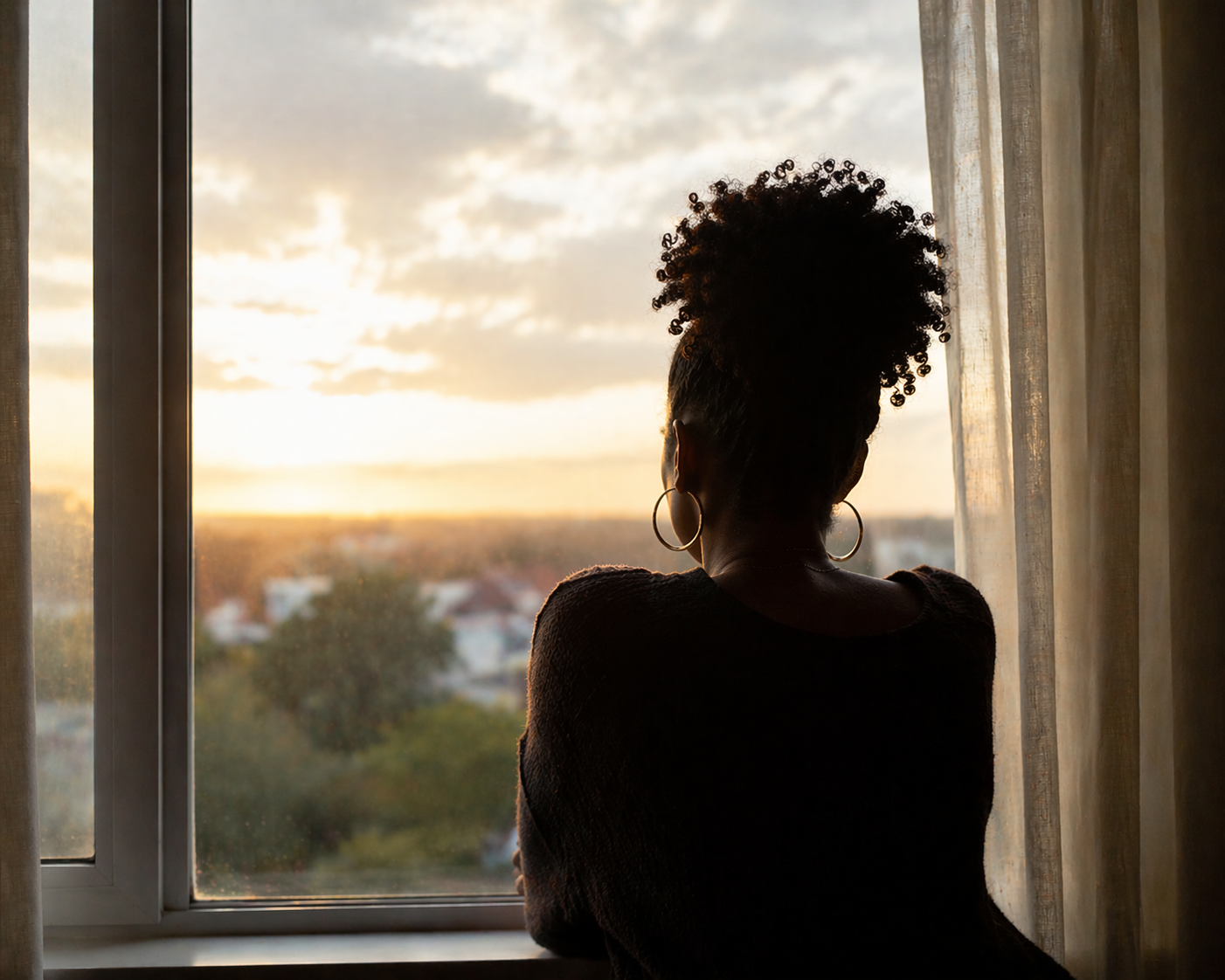
There are moments in life when you hear the news, and it settles in your spirit in a way you can’t quite shake.
This morning, on my way to work, my oldest daughter Winter dropped a message in our family group chat: “Did y’all see the news?” It came with a video attached. I couldn’t open it right away-I was driving , trying to stay focused-but something about it lingered. You can feel when something isn’t right.
By the time I got to my office and finally opened the message, there it was.
Another domestic violence situation. Another life taken. Another Black woman gone.
And every time, it hits. But if I’m being honest, it hits differently when it’s a Black woman. The sting sits deeper. Maybe because it feels so familiar. Maybe because it feels so close.
Black women have always had to fight battles on every front.
As my youngest daughter, Faith, says, “we’re always having to keep our heads on a swivel.” Always aware. Always watching. Never fully able to relax into safety. Living in the tension between what is and what should be.
We are taught to be twice as good just to be seen as equal.
Twice as educated.
Twice as composed.
Twice as strong.
We carry roles that stretch us thin - often being everything to everyone. Provider. Protector. Nurturer. Even in spaces where we’re supposed to be supported, we find ourselves filling in the gaps.
And strength-oh, we wear that like armor. Even when we are bone tired.
Especially when we are bone tired.
I was already a little triggered before I even opened that message.
Earlier, I had been reading about a well-known singer whose husband filed for divorce after twenty years of marriage. He filed. After years of infidelity. After everything he had put her through. And still, she made up her mind to stay. Tried to make it work.
That part sat heavy with me.
Because twenty years ago, I was that woman.
I stayed longer than I should have. I endured things I should have never had to explain away. The gas-lighting. The narcissistic mood swings. The subtle put-downs that slowly chip away at your confidence. The infidelity you can’t quite prove-but feel in your bones.
And the hardest truth? More people in the city I left, including family members, knew what was going on in my life than I did.
I used to be one of those people on the outside looking in, asking the same questions we so easily ask:
Why didn’t she leave? She had to know. Why did she let him stay?
But life has a way of humbling you. Like that old Andrae Crouch song that says, “I didn’t think it could be, until it happened to me.”
Because when you’re in it, its not that simple. It’s layered. It’s emotional. It’s psychological. It’s survival. And sometimes, it’s invisible.
What I know now is the smartest thing I can tell any woman is this: Whatever you have to do-protect yourself. Leave in secrecy if you must. Get to a safe house. Tell only who you can trust. Forget about what you’re leaving behind. Things can be replaced.
You cannot.
You can begin again. It may not feel like it in the moment, but you can.
I remember my youngest sister saying something to me that I will never forget. She said, “Had he done something to you, I wouldn’t have believed it- because from the outside, he acted like the most loving husband.”
That’s the smokescreen. That’s how this works. It’s not always loud. It’s not always visible. Sometimes it’s polished, charming, and convincing. Sometimes it looks like love to everyone else.
And that’s why we have to start having different conversations-especially in our communities. We have to teach our daughters that it is okay to leave. That love should never come with fear. That mental, verbal, and physical abuse are all unacceptable-no matter how they’re packaged.
We have to stop raising women to endure and start raising them to recognize when enough is enough. And we have to build communities that don’t just tell women to leave-but give them somewhere safe to land when they do. Because leaving is only one part of the journey. Having somewhere safe to go-that’s the part that saves lives.
And to the Black church community, this part matters deeply. We have to stop telling Black women to simply “hang in there.” Stop telling them to just pray for strength to endure hardship. Stop equating suffering with righteousness.
God has not called us to be emotional duct tape for broken systems or for men unwilling to confront their own deep-rooted issues. Endurance is not the same as purpose.
And staying at the cost of your safety, your sanity, and your life-that is not what love is supposed to look like.
My hope is that our churches are evolving beyond that old mindset. That we are creating spaces where truth can be spoken, where women are believed, where leaving is not seen as failure-but as wisdom. I also pray that women begin to avail themselves of resources-tools, counseling, safe spaces-that teach them not just how to survive, but how to live fully and freely.
And for goodness sake, we have to teach our young women this particular truth early: It is okay to be alone.
It is better to be whole and alone than broken and attached. Better to have peace in solitude than chaos in company. We have to redefine what strength looks like. It is not in how much you can endure. It is in knowing when to walk away. Because choosing yourself should never be a death sentence.
Black women deserve softness. They deserve safety. They deserve to rest without fear. They deserve to choose themselves-and live to see what comes next. And yet, here we are again, saying her name, mourning her loss, asking the same questions.
At some point, “again” has to become “no more.”
